

OPEN DOORS TO GLOBAL OPPORTUNITITES
CAMBRIDGE INTERNATIONAL
The objective
At MLI, we enhance your child’s learning foundation by pairing the globally recognized Cambridge curriculum with teaching that focuses on student inquiry and creativity. We incorporate project-based and collaborative learning.
As we want each student to fulfill their potential, we offer a wide range of subjects, which allows students to pursue deeper learning in the subjects they are most passionate about. With the help of expert educators, we design programs to challenge students, while igniting their passion to learn and explore.
The PROGRAMS
The Cambridge curriculum is divided into 3 programs, Cambridge International Primary Program (Grades 1-6), Cambridge Lower Secondary Program (Grades 7-8), and Cambridge IGCSE (Grades 9-10).
Cambridge Primary (5-11 years)
Students develop skills and understanding in English, Maths, and Science. Teachers monitor students’ progress through progression tests.
Cambridge Lower Secondary (11-14 years)
Students further develop their skills and understanding of English, maths, and science. Teachers monitor students’ progress through progression tests.
Cambridge Upper Secondary (14-16 years)
Students follow either Cambridge O Level or Cambridge IGCSE courses, leading to globally recognized qualifications. They build a broad learning program from a wide range of subjects.

MONTESSORI EDUCATION
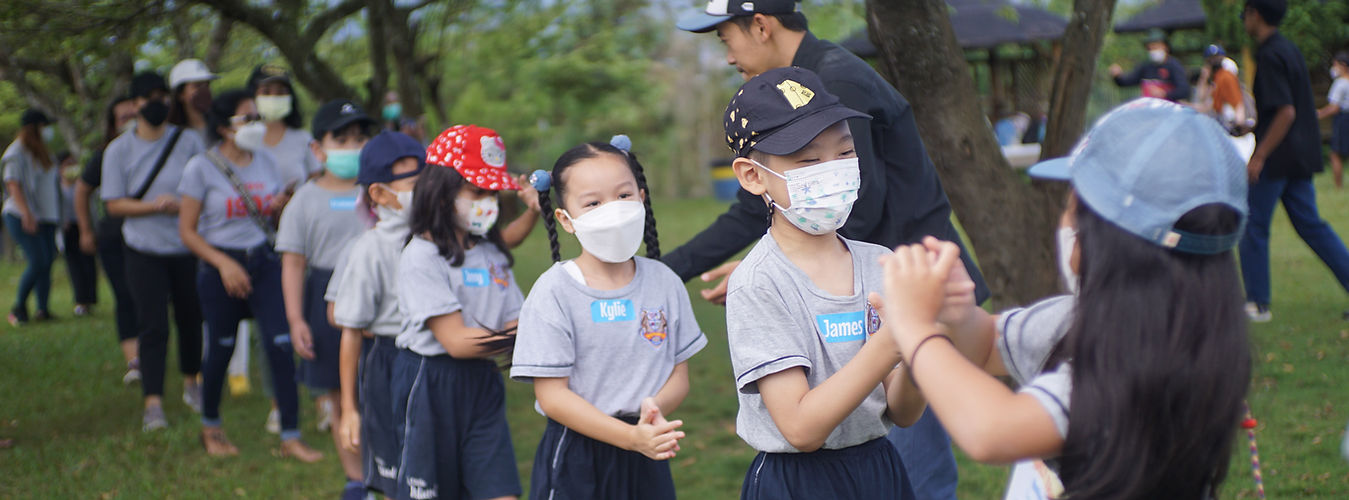
We apply Montessori as our educational approach to nurture happy lifelong learners. Given its long track record, Montessori has continuously proven itself as a fascinating, holistic, and innovative learning method even in this twentieth century.
Our classrooms are fully equipped with Montessori materials, which are designed to provide scaffolded, concrete, and hands-on experience to help students comprehend various concepts at ease.
Applying student-centred Montessori philosophy also means that all students are welcome to pursue their interests by working with different Montessori materials to others.
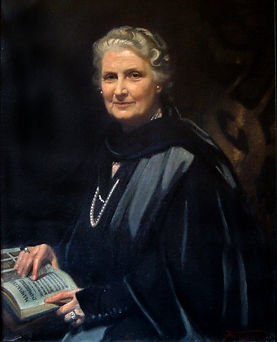
Dr. Maria Montessori
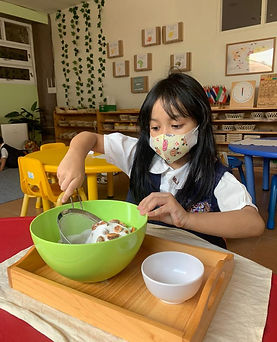
Practical Life Skills
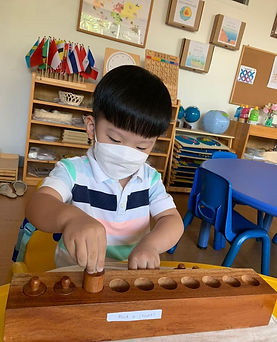
Sensorial
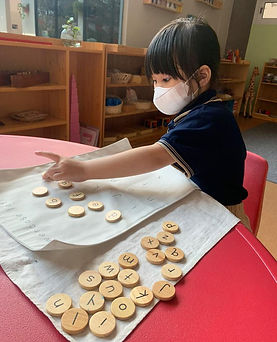
Language
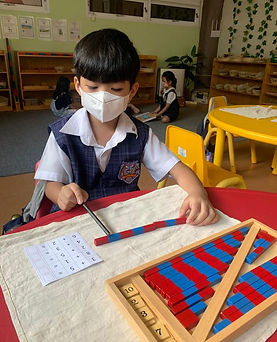
Mathematics
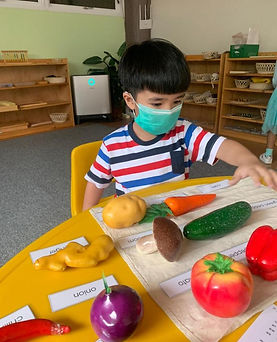
Cultural Studies
S.T.E.A.M Approach

This curriculum covers all domains of development, but focuses teaching and learning activities through a STEAM lens. The learning environment (indoors and out) had been carefully designed to promote STEAM explorations and support and enhance the curriculum.
The Curriculum encourages children to be curious, to wonder, think, play, question, and connect with the world around them, so they will become innovators able to make great contributions to society.
A STEAM-focused education integrates these aspects with hands-on and minds-on lessons that are highly effective in engaging students. A STEAM-based curriculum provides children the opportunities to explore STEAM-related concepts and see how they apply to everyday life.
WHOLE brain teaching
Designed for students of all ages, from kindergarten through college, Whole Brain Teaching maximizes student engagement by focusing on mimicry, which is a natural way for the brain to learn. This is coupled with an intense, in-the-moment teaching method that compels constant attention from students. From the beginning, the teacher introduces the basic rules to the class, a little bit at a time, and students are trained to listen and respond within the framework of those rules.
For example, when the teacher says “Class,” students must instantly respond “Yes!” In many instances, students must also repeat words exactly as the teacher says them (for example, if the teacher says “Class, Class!” then students must respond “Yes, Yes!”). In another core element, teachers use a scoreboard game with rewards, motivating students to pay attention so that they can win points. All of the elements used in Whole Brain Teaching are designed to mitigate inattentiveness and curb disciplinary disruptions, as students are required to respond out loud to everything the teacher is doing and saying. The intention is to keep them attentive and engaged—and to do so in a highly entertaining way.
WHOLE brain teaching
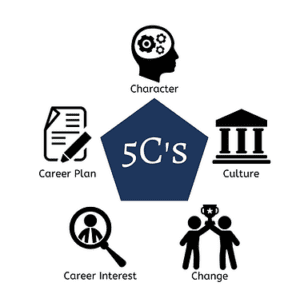
CHARACTER
Personal Responsibility:
- Integrity
- Conviction
- Self-Discipline
- Diligence
- Wisdom
Interpersonal Respect:
- Loyalty
- Courage
- Humility
- Kindness
- Thankfulness
CULTURE
Pillars:
- Family
- School
- Society
Foundations:
- A sound body and mind
- An optimistic attitude towards life
- Ability of life-long learning
- A strong sense of social responsibility
CHANGE
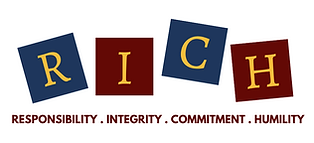
Teaching children the importance of L.I.G.H.T and R.I.C.H ensure their development as well-round individuals who are ready to take on any future challenges while being exemplary citizens.

CAREER INTEREST & PLAN
University Guidance Counselling at MLI & NLS provides a supportive environment for students, providing several resources and services to help students succeed at our school and wherever they may go afterwards. The services provided by the office range from career advising and university guidance to course placement and academic advising.
